

Magic Cube Puzzle is a Puzzle application developed by ZhimengTech, but with the best Android emulator-LDPlayer, you can download and play Magic Cube Puzzle on your computer.
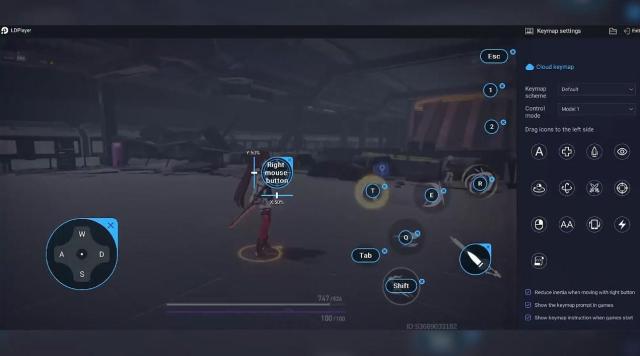
Running Magic Cube Puzzle on your computer allows you to browse clearly on a large screen, and controlling the application with a mouse and keyboard is much faster than using touchscreen, all while never having to worry about device battery issues.
With multi-instance and synchronization features, you can even run multiple applications and accounts on your PC.
And file sharing makes sharing images, videos, and files incredibly easy.
Download Magic Cube Puzzle and run it on your PC. Enjoy the large screen and high-definition quality on your PC!
The world's Best Endless Cube Game! The MOST attractive cube puzzle game EVER!DOWNLOAD the latest magic cube game for FREE!
If you are learning Fridrich Method, our app will be helpful. You can use this app to check out all algorithms of Fridrich Method. Or If you like puzzle game, we also provide endless cube puzzles for solving. Try to solve the cube puzzle in the limit of steps.
Features:
A realistic cube model.
Smooth rotate.
Endless puzzles.
Main Scene:
Play: You need to solve the cube puzzle in the limit of steps. Which level can you achieve?
Practice: Just let you play the Cube in a free way.
Algorithms: Show All CFOP Algorithms that contains 41 F2L, 57 OLL and 21 PLL.
/**************************************/
Follows is the 4 steps of CFOP Method:
1. The Cross
This first stage involves solving the four edge pieces in one outer layer of the puzzle, centering around a commonly colored center piece.
2. First Two Layers (F2L)
In F2L, corner and edge pieces are paired up and later moved to their correct location. There are 42 standard cases for each corner-edge pair including the case where it is already solved. It can also be done intuitively.
3. Orientation of the Last Layer (OLL)
This stage involves manipulating the top layer so that all the pieces therein have the same color on top, at the expense of incorrect colors on other sides. This stage involves a total of 57 algorithms. A simpler version, called "two-look OLL" orients edges and corners separately. It uses nine algorithms, two for edge orientation and seven for corner orientation.
4. Permutation of the Last Layer (PLL)
The final stage involves moving the pieces of the top layer while preserving their orientation. There is a total of 21 algorithms for this stage. They are distinguished by letter names, usually based on what they look like with arrows representing what pieces are swapped around. "Two-look" PLL solves the corners and edges separately. It uses six algorithms, two for corner permutation and four for edge permutation.