Welcome to Rust Mobile where spawning with nothing is easy but keeping your loot is the real challenge. If you’re a new player, knowing what to do first will make a world of difference between starting over all the time and making some steady progress. So, in this Rust Mobile beginner’s guide, we’ll cover the essential tips for gathering resources, crafting your first equipment, building a secure base, scavenging for loot, and surviving dangerous PvP encounters.

Start Smart: Your First Few Minutes Matter
When you first spawn, don't rush into a fight or run around without a plan. Your goal is to collect enough basic resources to start progressing while staying alive. Move away from the busiest areas and gather resources as you travel. Start with wood, stone, cloth, and food.
Focus on these early tasks:
- Hit trees to collect Wood.
- Mine stone nodes for Stone.
- Pick up Hemp or other cloth-producing plants.
- Collect food whenever you find it.
- Craft a basic weapon as soon as possible.
- Make a Sleeping Bag early so you have a respawn point.
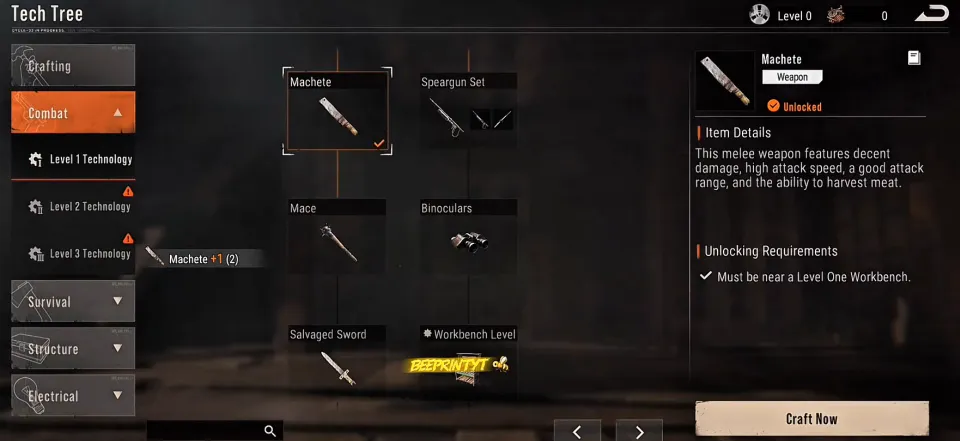
When gathering from trees and nodes, aim for the marked or glowing spots whenever possible to collect resources more efficiently.
Don't carry every resource you find for too long. Early deaths are common, so your goal is to gather what you need, secure it, and then continue.
Craft Your Essential Starter Items First
Once you have enough resources, the next step is to craft the basic items that make gathering and survival much easier. This is a big part of Rust Mobile gameplay, especially in your first few hours.
Your early crafting priorities should look something like this:
- Stone Hatchet – Helps you gather Wood more efficiently.
- Stone Pickaxe – Speeds up Stone and ore gathering.
- Wooden Spear – Gives you basic protection against animals and other early threats.
- Sleeping Bag – Creates a much-needed respawn point.
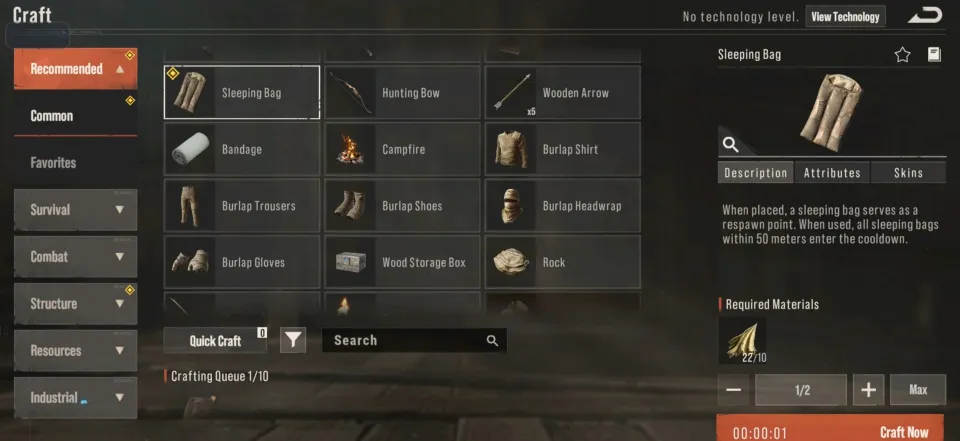
- Campfire – Lets you cook food and prepare for longer survival runs.
- Building Plan and Hammer – Essential when you're ready to build your first base.
You don't need to craft everything at once. Focus first on items that help you gather resources faster, stay alive, and recover quickly after a death.
Tip: Craft only what you need early on and save your resources for essential tools, food, weapons, and base upgrades.
How to Scavenge Resources Safely
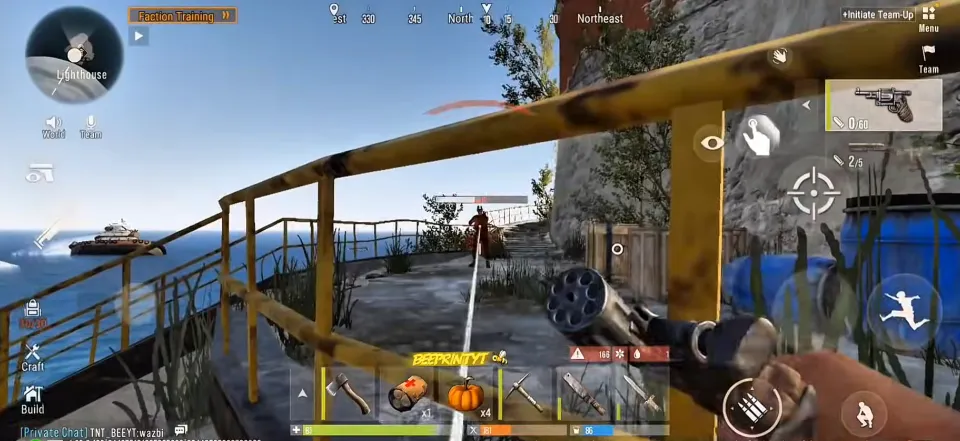
Scavenging is a big part of your early progression, especially if you're following this Rust Mobile beginners guide. While gathering nodes gives you basic materials, roads, barrels, crates, and smaller points of interest can provide valuable loot like Scrap and components. Scrap is especially important because you'll need it to unlock better technology and progress through the game.
Keep an eye out for:
- Barrels
- Small crates
- Roadside junk piles
- Low-risk monuments
- Components that can be recycled
- Metal and High-Quality Metal
- Food and medical supplies
Gather the Right Resources for Progression
As you progress through Rust Mobile, focus on collecting materials that help you craft better tools, build a stronger base, and unlock new equipment. Use this simple table to know what each important resource is mainly used for.
|
Resource |
Main Use |
|
Wood |
Used for building structures, crafting basic items, making tools, and providing fuel for things like Campfires and Furnaces. |
|
Stone |
Mainly used to build and upgrade your base from weaker materials into stronger Stone structures. It's also needed for several early crafting recipes. |
|
Metal Ore |
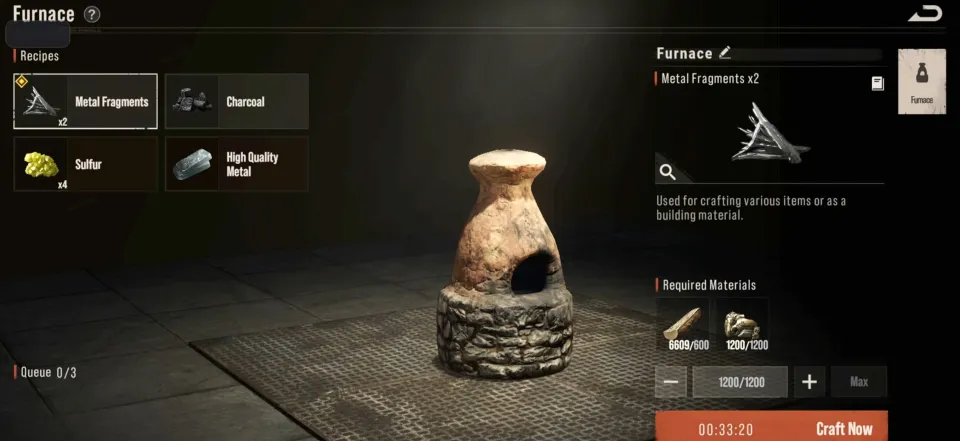
Smelted in a Furnace to create Metal Fragments, which are needed for stronger doors, weapons, tools, and other important upgrades. |
|
Sulfur Ore |
More important as you progress into the mid and late game. It's used to make Gunpowder and eventually explosives for more advanced combat and raiding. |
|
Cloth |
Used for essential survival items such as Sleeping Bags and Bandages. You can also use it for certain clothing and other crafting recipes. |
|
Animal Resources |
Hunting animals provides food and materials such as Animal Fat and Cloth. Animal Fat can be combined with Cloth to make Low Grade Fuel, which is useful for Furnaces and other equipment. |
|
Scrap |
One of the most important progression resources. You'll use Scrap to research items, unlock technology, and progress through Workbench tiers, so collect it whenever you can safely do so. |
|
High-Quality Metal |
A valuable resource mainly used for advanced crafting and stronger base components. You won't need much of it immediately, but saving it for later progression can be worthwhile. |
Build a Small Base Before You Take Bigger Risks
Your first base doesn't need to look impressive. In fact, keeping it small is usually the smarter option. A large wooden base takes more resources, attracts attention, and can be difficult to upgrade. Instead, focus on creating a secure place to store loot and respawn. A simple 1×1 starter base can work for your first night, but upgrading into a 2×1 base with an airlock gives you much better protection.
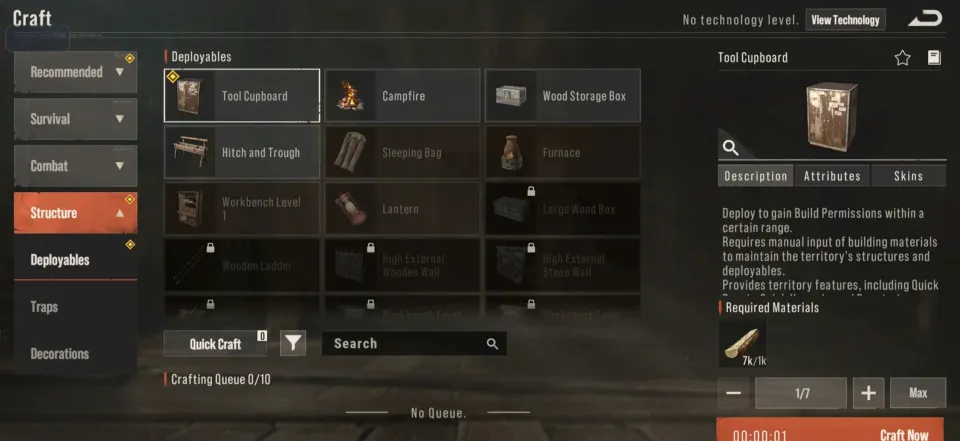
Start With a Simple 2×1 Base
A 2×1 layout gives you enough space for the most important items without becoming expensive to build.
Your base should include:
- A Tool Cupboard
- A Sleeping Bag
- Storage boxes
- At least two doors
- A secure entrance
- Enough space for future crafting stations
The airlock is especially important. Instead of opening one door directly into your base, create a small space between your outer and inner doors.
This gives you an extra layer of protection and makes it harder for someone to rush inside when you open the door.
Your upgrade priority should generally be:
Secure base → Upgrade walls → Improve doors → Add storage → Expand later
Use Scrap Carefully
Scrap is one of the most valuable progression resources in Rust Mobile, so don’t simply spend it because you have some saved up. This Rust Mobile beginner’s guide is better focused on the blueprints, tools, weapons and upgrades to make your next few runs safer and more efficient.
Good early priorities include:
- Workbench progression – Helps you unlock better crafting options.
- Better tools – Make gathering resources faster and more efficient.
- Useful weapons – Give you better protection during scavenging and PvP.
- Stronger doors – Improve your base's security.
- Important base upgrades – Make your loot and crafting area harder to break into.
If you find an item that can unlock a useful blueprint, consider researching it rather than spending Scrap on less important items. Saving your Scrap for upgrades that directly improve your progression can make a big difference.
How to Handle PvP as a Beginner
Fighting other players is a big part of Rust Mobile, but you don’t have to take every fight. When you're getting started, avoiding stronger players can save your gear and get you ahead faster. Think about what you'll get and what you'll lose if you die before you attack.
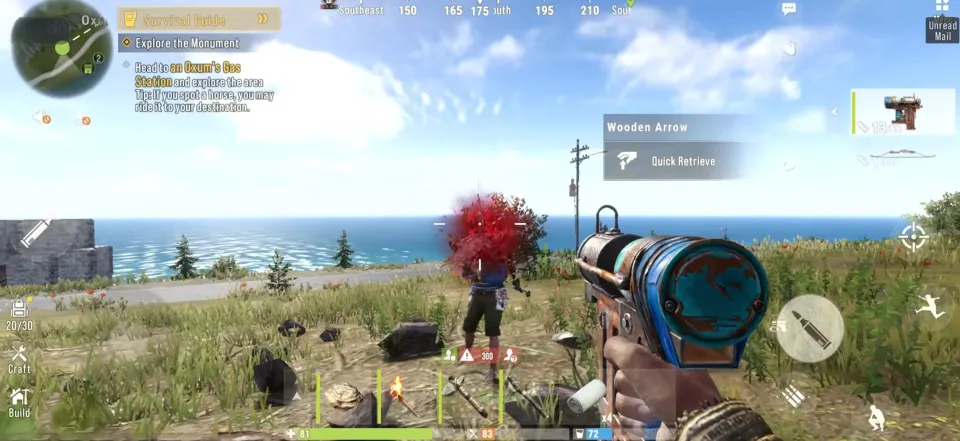
Use Positioning Instead of Rushing
If you do decide to fight, don't run straight toward your opponent or stand in the open. Use the environment to make yourself harder to hit and give yourself more options if the fight goes badly.
Follow these steps:
- Find Cover – Use trees, rocks, buildings, and other objects to avoid being exposed.
- Watch Your Surroundings – Before attacking, check for other players who could join the fight.
- Use High Ground – Hills and elevated areas can give you a better view and help you spot enemies first.
- Keep Moving – Avoid standing still during an engagement and make yourself a harder target.
- Listen Carefully – Footsteps, gunshots, and other sounds can reveal where nearby players are.
- Know When to Retreat – If you're outnumbered or outgeared, disengage and return to safety instead of risking everything.
Upgrade Your Weapons Step by Step
You don't need to rush for the strongest gun as soon as you start playing. In this Rust Mobile beginner guide, it's better to build your weapon collection gradually as you gather resources and unlock better crafting options.
A simple early progression path is:
Spear → Hunting Bow → Crossbow or Early Firearms → Better Guns
The Hunting Bow is particularly useful early on because it gives you a reliable ranged option without requiring a huge investment of resources. It can help you defend yourself, hunt animals, and take advantage of weaker or unaware enemies.
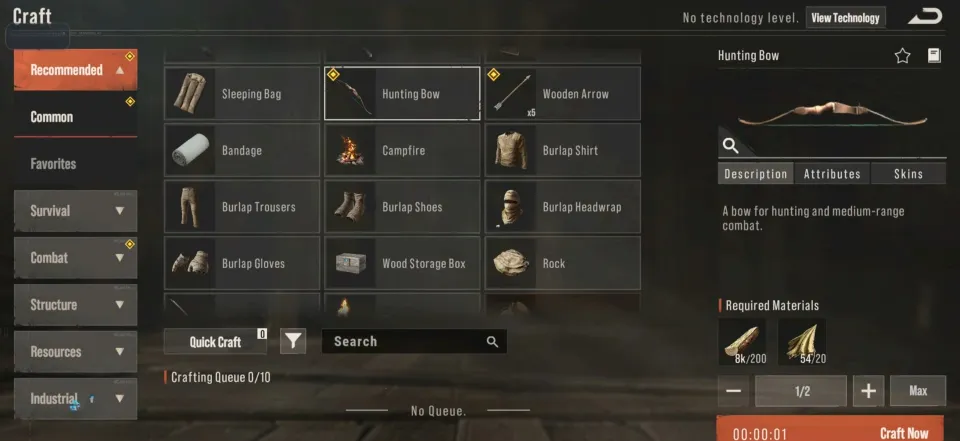
As you unlock stronger weapons, remember that having a better gun doesn't automatically mean you'll win every fight. Good positioning, cover, awareness, movement, and knowing when to retreat can be just as important as the weapon in your hands.
Avoid High-Risk Areas Until You're Ready
As a beginner, there's no reason to rush into the most dangerous parts of the map. Monuments and major loot locations can give you better rewards, but they also attract geared players and can turn a simple loot run into a quick trip back to your Sleeping Bag. In this Rust Mobile beginner guide, focus on learning safer routes first, then gradually take on more dangerous areas as your gear and confidence improve.
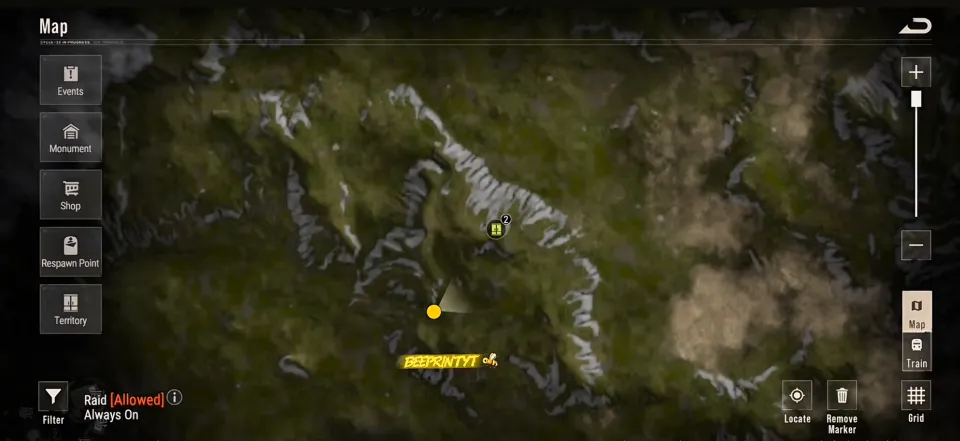
Follow this progression:
- Farm basic resources – Gather Wood, Stone, Cloth, and other essentials near your base.
- Scavenge safer routes – Loot barrels, crates, and lower-risk areas while learning the map.
- Build and secure your base – Store your valuable loot and create a reliable place to respawn.
- Unlock better gear – Progress through Workbench tiers and improve your weapons, tools, and armor.
- Explore stronger loot areas – Once you're better prepared, start visiting higher-risk monuments for better rewards.
Tip: Learn the safer areas first. You can always take bigger risks later, but losing your best gear before you're ready can slow your progression.
Final Rust Mobile Beginner Tips
Starting out in Rust Mobile can be rough, but you don't need to figure everything out at once. Keep these Rust Mobile tips in mind and you'll have a much easier time getting started.
- Secure a Sleeping Bag early.
- Craft better gathering tools first.
- Build a small base before collecting too much loot.
- Upgrade your starter base to Stone quickly.
- Use an airlock to protect your entrance.
- Store valuable resources regularly.
- Scavenge for Scrap but don't get greedy.
- Avoid unnecessary PvP early on.
- Use cover and positioning when fighting.
- Keep backup resources at home for recovery.
- Work toward Workbench Tier 1 as your first major progression goal.
People Also Ask
What Is a Tool Cupboard (TC) and Why Do I Need One?
A Tool Cupboard (TC) claims the building area around your base and helps prevent other players from building nearby. It also helps prevent your base from decaying when it's stocked with the required upkeep resources. Place your TC inside a secure room, authorize yourself, and keep it protected from other players.
Where Can I Find Better Loot in Rust Mobile?
Good places to look for loot include roads, piles of junk, gas stations, and supermarkets. Higher tier monuments have better rewards but also attract stronger players and have higher risk for PvP. Better to explore these once you have a secure base and better weapons.
How Do I Protect My Base From Raids?
Keep your base small, use an airlock, upgrade your walls and doors, and choose a less obvious location. Store your most valuable loot in the most secure part of your base. As you progress, you can also add honeycomb walls to create extra layers of protection.
Conclusion
And that's a wrap on this Rust Mobile beginner guide! Your first few hours might be rough, but don't let a few deaths or lost loot discourage you. Focus on gathering smart, keeping your base secure, avoiding unnecessary fights, and upgrading your gear step by step. Once you get the hang of the early game, you'll start spending less time trying to survive and more time deciding how far you want to push your next run. So grab your tools, secure your base, and get back out there, your next big haul could be just around the corner.