
So you just downloaded Star Savior… and now you’re staring at a screen full of anime girls, star elements, and menus that look like they require a PhD in gacha science.
Relax. This game looks complicated, but it’s actually very forgiving—if you don’t make beginner mistakes. This guide skips the fluff and tells you exactly what matters so you can progress fast without bricking your account.
What Kind of Game Is Star Savior?
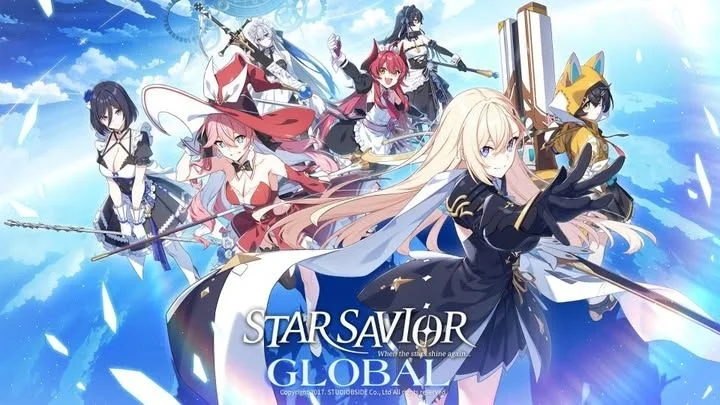
Players play as the captain of a team of saviors, talented girls who each control the power of the stars. Your job is to guide them through the journey, fighting enemies and progressing through the story.
Star Savior is a turn-based gacha RPG with:
- Team-based combat (4 characters per team)
- Elemental counter system
- Idle/AFK progression
- Heavy character building (levels, gear, dupes, training… the whole package)
Think: strategy RPG + idle game + waifu collector.
Reroll or Not? (The Eternal Question)
Short answer: Optional, not mandatory.
If you do reroll, aim for:
- Top-tier all-rounder (carry + sustain)
- Strong single-target DPS
- High-value limited/collab unit
But here’s the reality: the game provides a large number of free pulls in the early stages, and most early content can be cleared using free units without difficulty. In addition, many of your initial characters will eventually be replaced as you progress. Therefore, unless you are aiming for an optimized start, it is more practical to continue playing rather than repeatedly rerolling.
Team Building Basics
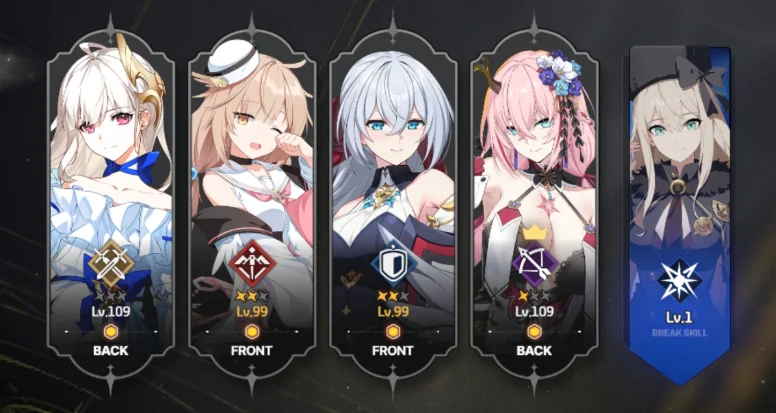
You run 4 characters, and positioning actually matters:
- Front row → Tanks / Healers (they take hits)
- Back row → DPS (keep them alive so they actually do damage)
Yes, it’s slightly backwards compared to some RPGs.
|
Class Roles |
Effect |
|
Tank |
absorbs damage |
|
DPS |
deals high damage |
|
Support |
provides healing, buffs, and utility |
|
A balanced team = smoother progress |
|
Combat 101 (Auto Is Your Best Friend)
Although skills can be selected manually, it is more efficient to rely on Auto mode during the early game. You should focus on:
- Element advantage (important)
- Keeping your team alive
- Swapping units if needed
The game literally tells you enemy weaknesses. If you ignore it, that’s on you.
Starlink( The Most Important System)
This is where the game becomes beginner-friendly. Instead of leveling 20 characters:
- You level 4–5 core units
- Everyone else gets synced to the lowest level among them
The rest of the characters are automatically synchronized to match the lowest level among those core units.
As a result, this system significantly reduces resource consumption, accelerates overall progression, and minimizes repetitive grinding.
Rule: Pick a core team and commit.
Dupes Explained
Dupes do two things:
- Upgrade passives (sometimes HUGE boosts)
- Increase level caps
Typical upgrade breakpoints in Star Savior revolve around duplicate copies of a character.
The first dupe usually provides the most significant power spike, often enhancing or unlocking key passive effects. Additional dupes mainly serve to increase the character’s maximum level cap, enabling further progression.
However, this system is not overly restrictive, as the game features relatively generous summon rates of around 4%, along with a mileage system that guarantees a target reward after 200 pulls, ensuring steady long-term progress.
Training Mode
This is basically a roguelike stat-building mode.
What you do:
- Pick a character
- Go through “days”
- Choose upgrades and events
- Fight bosses
- Get an Archive (gear-like boost)
In the early game, there is no need to optimize every choice—basic completion is sufficient. However, in the late game, this system becomes a major source of power and requires more careful planning.
Archives provide significant stat boosts and can greatly impact overall performance. While the process may feel repetitive, it is a core mechanic and cannot be ignored in the long term.
Gear & Progression Priorities
Your power comes from:
- Levels
- Skills
- Gear
- Archives (from training)
Early priority:
Push main story> Upgrade core team> Equip basic gear> Do training casually
If you’re stuck, it’s simply because you’re underleveled.
Daily To-do List
If you log in and feel overwhelmed, just do this:
- Claim mailbox rewards
- Collect AFK resources (don’t let it cap)
- Finish daily missions
- Do training runs
- Push story
- Spend stamina
- Use summon tickets (on good banners only)
Done. You’re efficient now.
PvP – Should You Care?
Short answer: Not really (for beginners).
While the rewards are decent, they aren’t game-breaking, and the current meta mostly functions as a speed check simulator. Early on, strategic options are limited, so you can safely ignore PvP and still make steady progress.
Beginner Mistakes That Will Ruin Your Account
Let’s be blunt: there are several common mistakes that can seriously slow your progress.
1. Leveling too many characters
→ You will run out of resources instantly
2. Pulling on every banner
→ Save for rate-ups
3. Ignoring element advantage
→ Enjoy doing zero damage
4. Over-investing early gear/training
→ You’ll replace them anyway
5. Letting AFK rewards cap
→ Free resources wasted (pain)
Avoiding these errors can save you a lot of time and resources in the long run.
LDPlayer: The Best Android Emulator to Play StarSavior on PC!!!
Conclusion
In the end, Star Savior may seem like a complex gacha, but it’s surprisingly approachable. With generous early rewards, strong quality-of-life features like auto, sweep, and AFK, and flexible progression, you can choose how to play. Whether you want to play casually to collect waifus and relax or play seriously to optimize builds and push content, both approaches are perfectly viable.
