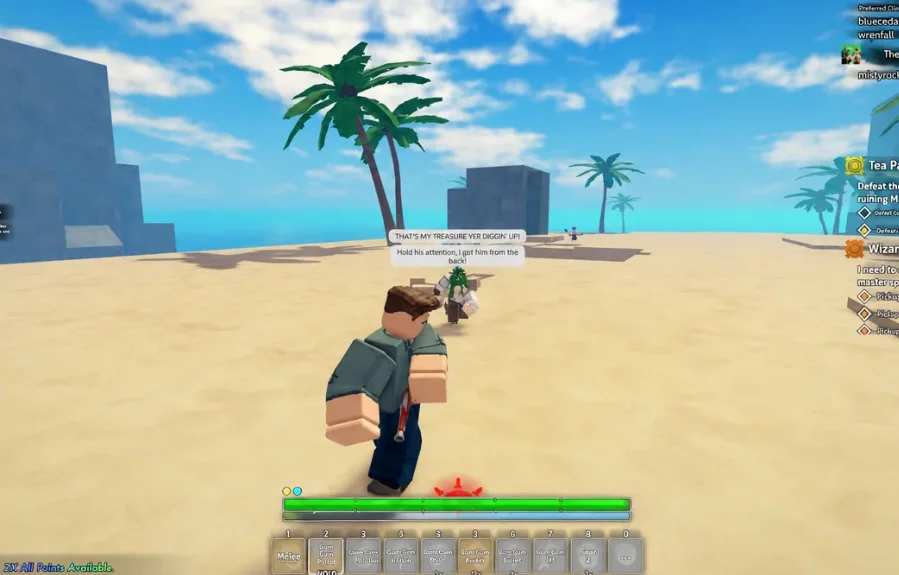
Dungeon Quest Reborn brings the classic Roblox dungeon-crawling loop back with updated progression: enter a dungeon, defeat enemy packs and bosses, collect better equipment, upgrade your strongest gear, and gradually move into harder difficulties. The current official Roblox experience is [Northern Lands] Dungeon Quest Reborn, developed by Delta Quarters OG and officially licensed by Voldex. It supports both solo and multiplayer progression.
For beginners, the biggest mistakes are usually not mechanical. They come from splitting stats between incompatible builds, upgrading temporary gear too heavily, or pushing a difficulty that takes too long to clear. This guide covers the safest starting build, early dungeon progression, fast leveling, gear management, Hardcore Mode, and useful beginner tips.
Dungeon Quest Reborn Class Tier List
Dungeon Quest Reborn does not lock you into a permanent class at character creation. In practice, your Skill Points, equipment, weapons, and abilities determine whether you are playing a Mage, Warrior, Healer, or Tank-style build. The two main damage paths are Mage and Warrior, while Healer and Tank are more specialized roles for group content.
For a beginner-focused tier list, the ranking looks like this:
|
Tier |
Class / Build |
Best For |
Beginner Verdict |
|
S |
Mage |
Solo leveling, ranged combat, learning bosses |
Best beginner choice |
|
A |
Warrior |
Physical DPS, fast clears with strong gear |
Excellent, but less forgiving |
|
B |
Healer |
Difficult multiplayer parties |
Useful support, slow for solo leveling |
|
B |
Tank |
Group survivability and frontline play |
Situational for beginners |
Best Class for Beginners – Mage
For a completely new player, Mage is currently the safest beginner recommendation.
The main advantage is range. Staying farther from enemies gives you more time to read boss attacks and reposition, while Spell-focused builds also have access to AoE and healing options. Current Reborn beginner guides consistently recommend Mage as the easiest starting path for solo progression.
Early Mage gameplay should focus on:
Spell Power → ranged damage → AoE clearing → staying out of dangerous melee attacks.
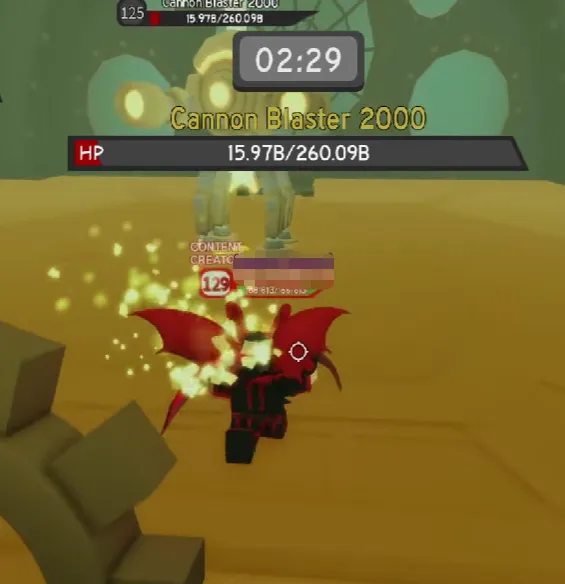
Do not spread points across Physical and Spell Power at the same time. A focused Spell build clears rooms much faster than a hybrid character with mediocre damage in both categories.
Is Warrior Good?
Yes. Warrior is completely viable, especially if your best drops support Physical Power and you are comfortable fighting closer to enemies.
Warrior trades some of Mage's safety for direct melee pressure. Abilities such as Whirlwind are useful for clearing grouped enemies, while stronger Physical equipment can make Warrior extremely competitive as progression continues.
The key is not to switch every time one interesting weapon drops. If your current equipment, abilities, and skill points strongly favor Spell Power, remain Mage until you have a genuine reason to respec.
Healer and Tank
Healer and Tank are primarily party-oriented roles.
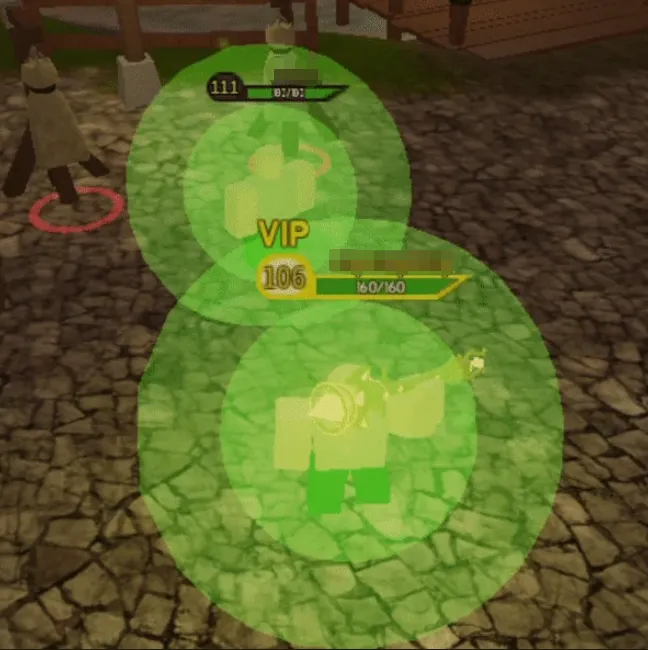
A Healer uses Spell-focused equipment and dedicated healing abilities to keep a group alive during difficult runs. Tank builds prioritize survivability and controlling enemy pressure.
They become useful when a party is struggling to survive harder content, but they are generally slower for solo leveling because sacrificing damage also reduces clear speed.
For a first account:
Mage or Warrior first → specialized support roles later.
Fast Leveling Guide
The most important leveling rule is:
Farm the hardest dungeon and difficulty you can clear quickly and consistently—not simply the hardest one you can enter.
A failed Nightmare run earns less useful progress than several fast clears on a lower difficulty. Current leveling documentation specifically recommends prioritizing clear speed when deciding whether to move up.
Your progression loop should look like this:
Clear dungeon → collect loot → compare stats → sell junk → upgrade keeper gear → raise difficulty when clears remain fast.
Do not increase difficulty just because it becomes available.
Early Dungeon Progression
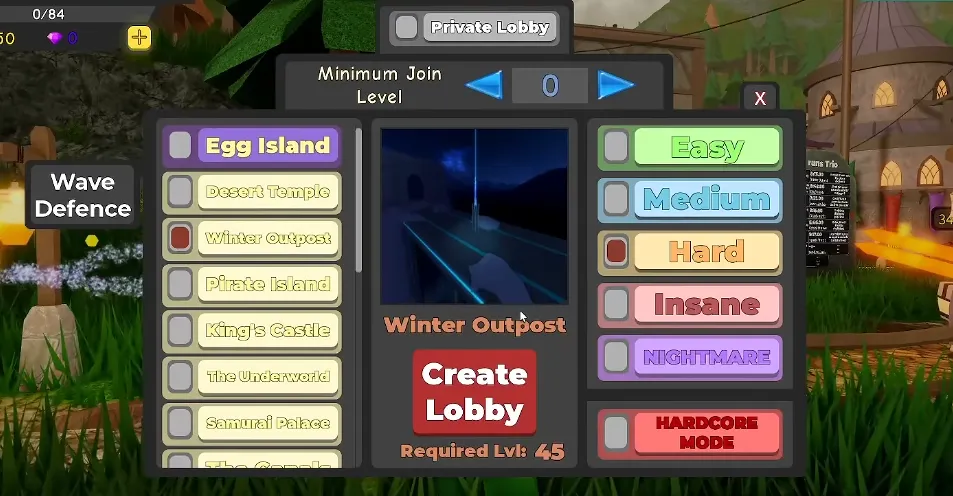
The reliable opening dungeon sequence is:
|
Order |
Dungeon |
Main Goal |
|
1 |
Desert Temple |
Learn combat and build your first loadout |
|
2 |
Winter Outpost |
Improve build consistency |
|
3 |
Pirate Island |
Transition into stronger mid-game gear |
|
4 |
King's Castle |
Continue later progression |
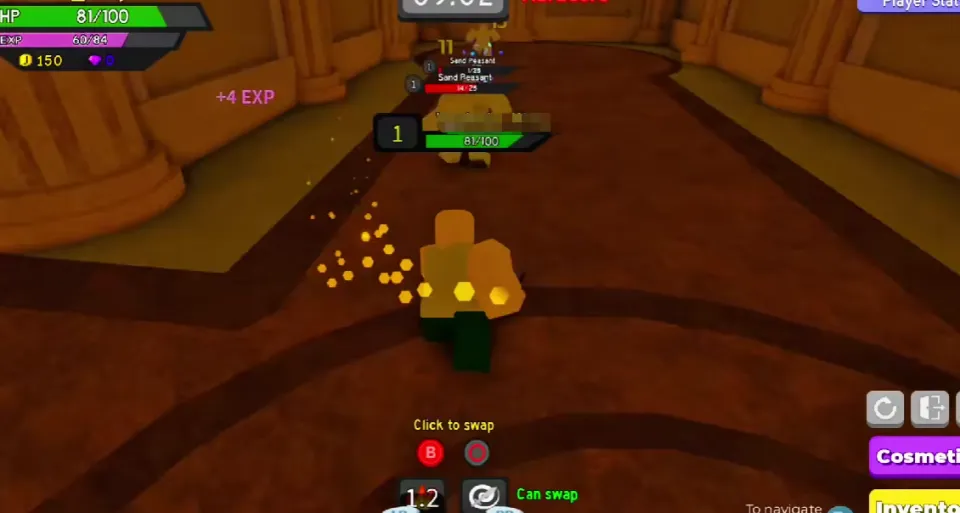
Desert Temple begins with the familiar difficulty ladder of Easy, Medium, Hard, Insane, and Nightmare. Start on Easy long enough to understand enemy positioning and the boss, then climb difficulties only when your current one becomes comfortable.
Exact dungeon level requirements can change between updates, so follow the requirement shown in the live dungeon selector rather than relying on an old level table.
Skill Point Guide
One of the most damaging beginner mistakes is creating a build like:
Physical + Spell + Health all evenly distributed.
Instead, pick your primary damage path.
Mage
- Prioritize: Spell Power
Warrior
- Prioritize: Physical Power
Add survivability only when you actually need it to survive a mechanic. Every extra point that improves your main damage stat helps shorten rooms and boss phases, which improves your overall leveling speed. Current beginner documentation strongly recommends committing to one damage stat rather than building a hybrid character.
Gear and Gold Management
The lobby contains the systems that drive your progression:
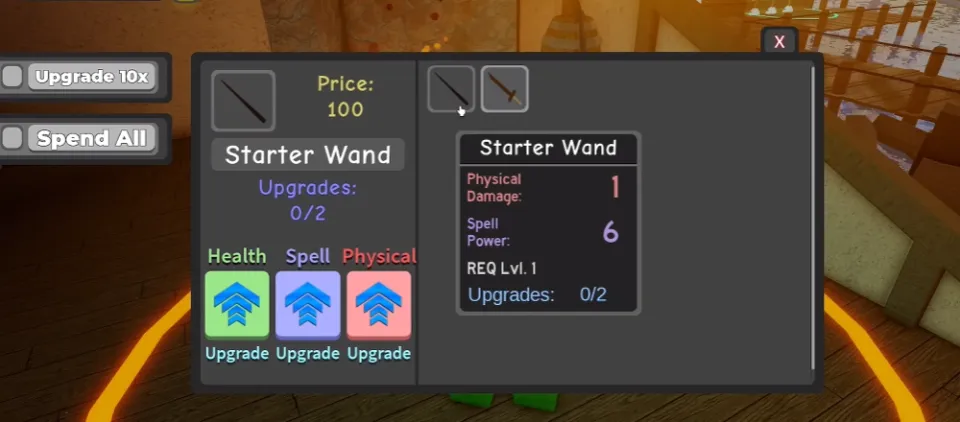
- Upgrade NPC – spend Gold to improve equipment.
- Sell NPC – convert unwanted drops into Gold.
- Daily Reward NPC – claim free progression items.
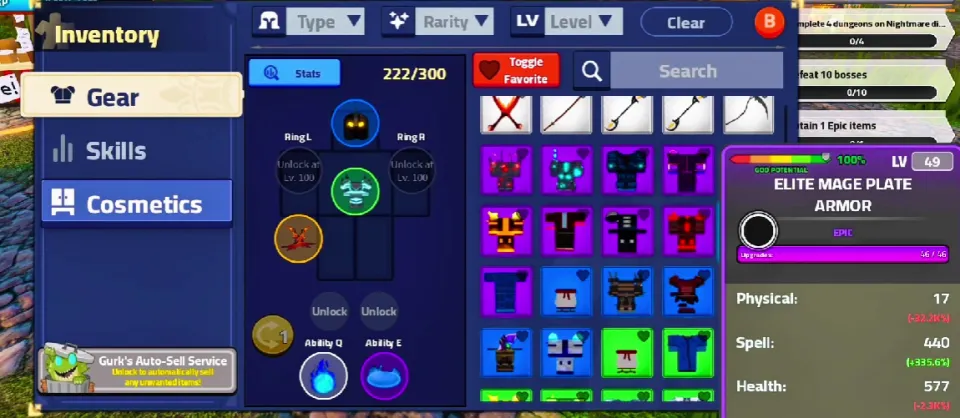
Do not upgrade every new item. Early equipment is replaced frequently, so heavy investment into a temporary Common or Rare drop can drain Gold that would have been much more valuable on the next meaningful weapon upgrade.
Before upgrading, ask: Does this item match my build, and will I keep it for multiple runs?
- If yes, invest.
- If not, save the Gold.
Your weapon and offensive stats usually deserve priority because higher damage improves every future farming run.
How to Use Hardcore Mode
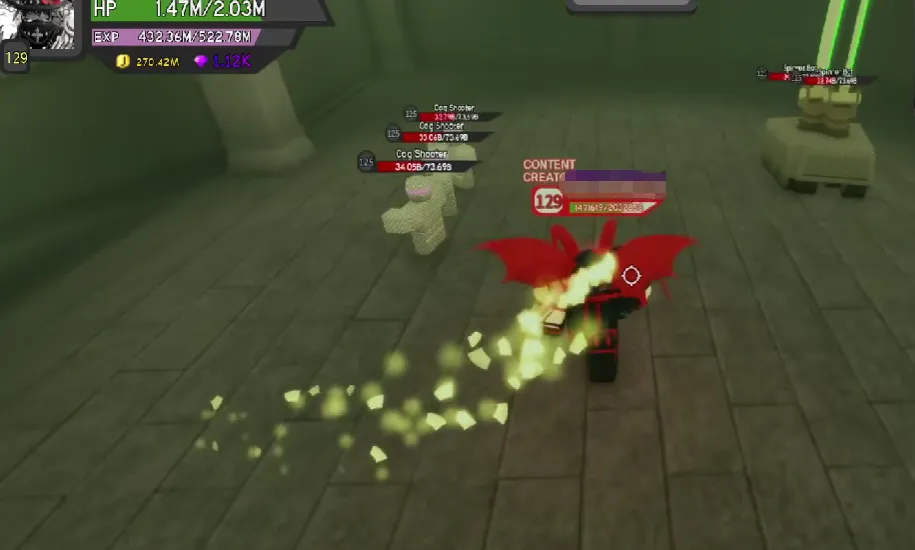
Hardcore Mode adds a simple but important rule:
You only get one life.
Successful Hardcore clears also provide additional loot compared with a normal run, making it valuable once you already understand the dungeon.
Do not activate Hardcore the first time you enter a new map.
A better rule is:
Clear the dungeon safely several times → learn the boss patterns → then enable Hardcore.
More rewards do not matter if you regularly die before reaching the boss.


Solo or Multiplayer?
Both work. The official game description explicitly supports playing alone or with friends.
Solo is excellent for learning boss patterns and testing whether your build can genuinely clear a dungeon.
Parties become more useful when pushing difficult content because different players can contribute damage, healing, or survivability.
If a dungeon feels slightly too difficult solo, joining a competent group can help you reach better gear earlier.
10 Pro Tips and Tricks
1. Start Mage if you are completely new. Range makes learning bosses easier.
2. Never split Physical and Spell Power early.
3. Farm for clear speed, not bragging rights. Three clean runs beat one failed Nightmare attempt.
4. Learn Desert Temple before turning on Hardcore.
5. Upgrade good gear, not every gear drop.
6. Sell items that do not fit your build to fund meaningful upgrades.
7. Use AoE abilities on grouped enemies. One ability hitting several mobs dramatically improves clear speed.
8. Move to the next dungeon when you can farm it reliably. Do not remain in an outdated map forever searching for one Legendary.
9. Claim the Daily Reward whenever available.
10. Read live dungeon requirements. Dungeon gates can change as Reborn receives updates.
Final Verdict
The easiest Dungeon Quest Reborn progression plan is surprisingly simple:
Choose one build → focus one damage stat → farm fast clears → upgrade only meaningful equipment → increase difficulty gradually.
Mage is the safest beginner path because ranged Spell damage gives new players more room to learn enemy mechanics, while Warrior is an excellent alternative once you are comfortable fighting in melee or obtain strong Physical gear.
Begin with Desert Temple, continue through Winter Outpost and Pirate Island as the live game unlocks them, and only use Hardcore once you can consistently survive the dungeon.
Most importantly, do not let rare loot distract you from progression. A focused build with good clear speed will level faster than an unfocused character endlessly farming outdated content for a perfect drop.
More Guides: